
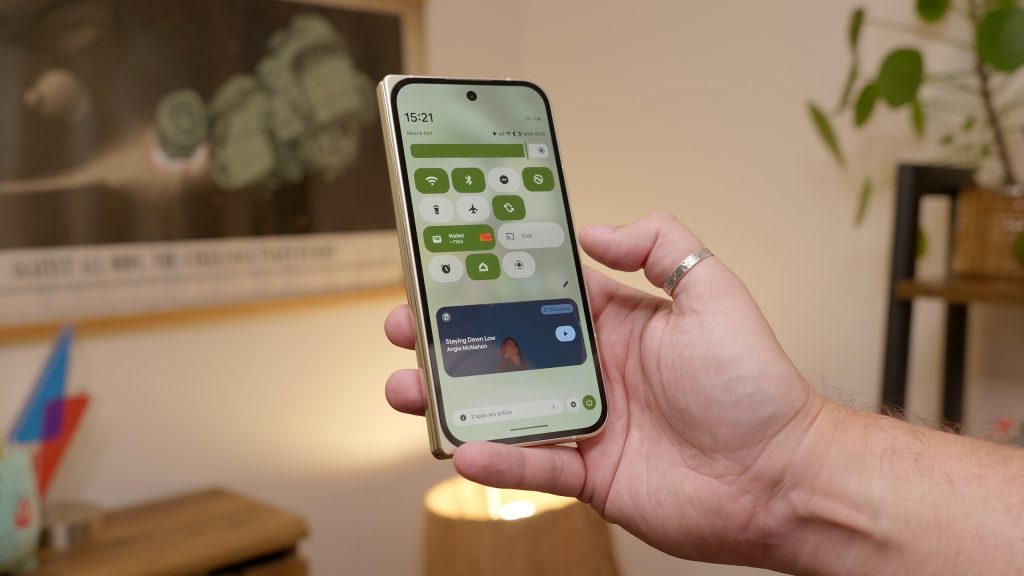
Google is preparing to roll out Android 17 with a fresh visual twist, introducing a system-wide blur effect that gives the interface a translucent, Liquid Glass-inspired look.
Internal builds seen by 9to5Google confirm that this year’s update will continue the design evolution started with Material 3 Expressive, shifting away from solid backgrounds toward a softer, layered aesthetic. The change affects key UI elements such as the volume bar, power menu, and volume sheet, all of which will soon allow users to glimpse what lies beneath.
The blurred design is tinted by Dynamic Colour themes, according to the report, ensuring consistency with wallpapers and app icons. For example, the pill-shaped volume slider will appear translucent whether on the homescreen or inside an app, subtly revealing the background without compromising usability.
This approach builds on Android 16 QPR1, where Google first added blur to the notification shade and Quick Settings panel, explaining that the effect provides a “sense of depth” and keeps users aware of ongoing activity.
Compared to Apple’s Liquid Glass aesthetic on iOS, Google’s take is more restrained. The blur is designed to feel lightweight rather than flashy, with the company seemingly intent on refining rather than reinventing the interface.
While Android 17 marks a smaller visual refresh than last year’s overhaul, the consistency of blurred elements across the OS suggests Google is committed to layering and translucency as part of its long-term design language.
However, questions remain about whether this blur effect will extend beyond the operating system.
At present, Material 3 Expressive for apps lacks translucency, leaving developers wondering whether Google will eventually unify the design across third-party software. If the company chooses to keep blur exclusive to system UI, Android 17 may feel more like a refinement than a revolution.
Therefore, Android 17’s transparent design signals Google’s steady march toward a more fluid, layered interface. It may not be the dramatic overhaul of last year, but it continues the subtle evolution of Android’s visual identity, offering users a cleaner, more modern feel without sacrificing familiarity.
The post Android 17 to get a Liquid Glass-inspired transparent design appeared first on Trusted Reviews.