

Cyberpower is one of the largest pre-built PC sellers in the UK, and right now they are offering guidance for people wondering what kind of computer is best for them.
If you’re short on space and mostly browse, stream and work, a mini PC is the better choice for you. If you want the most performance and the freedom to upgrade for years, a full-size tower is more suitable for your needs. Or if you have minimal desk space, but still need the power of a mini PC, a small form factor mini PC splits the difference.
What is a Mini PC?
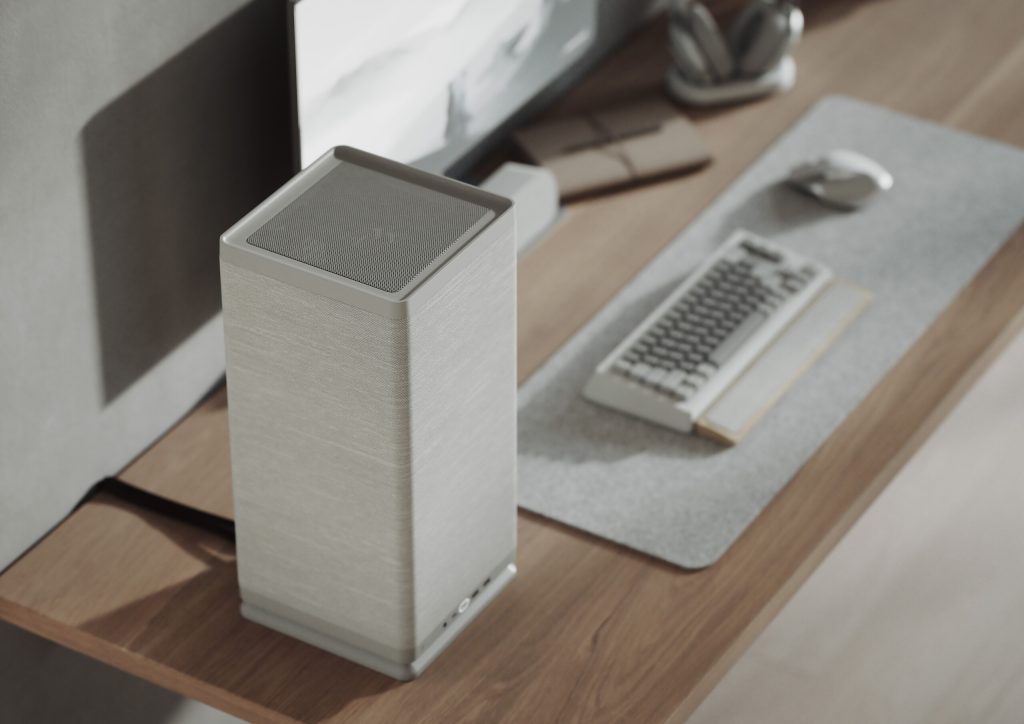
A mini PC is a desktop computer built into a chassis far smaller than a standard tower, often closer in size to a hardback book or a TV streaming box. It still covers the basic tasks a desktop PC can do, but it frees up the space a mid-tower would take.
The term actually covers two quite different kinds of machine, and knowing which is which is the quickest way to narrow down your choice.
Different types of Mini PC
Small form factor (SFF) PCs use a compact mini-ITX motherboard but accept full desktop processors and graphics cards. Because of this, they can deliver performance close to a tower in a far smaller case, which makes them the mini PC to look at if gaming is on your list.
CyberPower’s Ion Pro SFF Mini Gaming PC is a good example, pairing an Intel Core i5-12400F with an Nvidia GeForce RTX 5060, 32GB of DDR5 and a 2TB NVMe SSD. Anyone wanting more graphics muscle can step up to the Ion Elite, which moves to an AMD Ryzen 5 7500F and an RTX 5060 Ti.
NUC-style mini PCs sit at the other end of the scale. These palm-sized units use laptop-class chips with integrated graphics, so they suit office work, media playback and home use rather than gaming, and they run quietly in the background.
The MSI Cubi range shows how flexible the format can be. The Cubi NUC AI 1UMG, with an Intel Core Ultra 5 or Ultra 7 chip, takes on multitasking and productivity work, while the Cubi NUC TWG S uses an Intel N150 for browsing, streaming and everyday tasks.
Put simply, an SFF is a compact gaming machine, while a NUC-style PC is a compact everyday computer.
Mini PC vs Desktop core differences
A full-size tower gives you the most flexibility. There’s room for larger graphics cards, bigger coolers, extra drives and more fans, so upgrading a few years down the line is straightforward and the parts run cooler under heavy load.
Mini PCs win on space and, in the case of NUC-style machines, on power consumption too. Their low-power chips use far less electricity than a desktop with a dedicated graphics card, which adds up if your PC is on all day. An SFF with a desktop GPU, however, draws much the same as a tower.
Size affects price as well. CyberPower’s Infinity X135 Gaming PC uses the same Core i5-12400F and RTX 5060 as the Ion Pro SFF, yet it sits at a lower price. Part of the gap reflects the Ion Pro’s larger SSD, but compact cases and mini-ITX motherboards typically cost more too.
Which is best for gaming?
A NUC-style mini PC isn’t the right tool for gaming, as integrated graphics struggle with modern titles at decent settings. The real choice is between a tower and an SFF.
A tower makes the most sense if you want a high-end graphics card now or plan to upgrade later. Systems like the Ultra R99, with an AMD Ryzen 7 9850X3D and an RTX 5070, show the kind of hardware a full-size case accommodates, with room to fit a bigger GPU down the line.
If space is the deciding factor, an SFF like the Ion Pro or Ion Elite runs the same games in a far smaller footprint. The trade-off is less room for future upgrades.
Which is best for day-to-day work?
Email, documents, video calls, browsing and streaming don’t need a big machine at all. A NUC-style mini PC handles these tasks comfortably while staying quiet and using little power.
The Cubi range fits naturally into home offices, student rooms and shared family spaces. Cubi models can be VESA-mounted behind a monitor so they take up almost no desk space, and they’re suited to a three-monitor setup if you like to spread your work out.
Laptops vs Mini PC?
At the same price, an SFF mini PC will generally outperform a gaming laptop. Desktop processors and graphics cards run at higher sustained power limits than their mobile equivalents, and the extra room for cooling means an SFF holds its speeds through long sessions where a thin laptop throttles and gets loud.
Upgrades are easier too, since an SFF’s graphics card, storage and memory can be swapped, while a laptop’s graphics chip is fixed and its memory is often soldered in place. A laptop still makes more sense if you genuinely need to game away from a desk, as it brings its own screen, keyboard and battery.
So, which should you choose?
The right choice comes down to your space and what applications you need your PC to run. A full-size tower offers the most power and the longest upgrade path, while an SFF brings gaming performance to rooms where a tower won’t fit.
Anyone who mostly works, browses and streams will be well served by a NUC-style model, and CyberPower’s mini PC range covers both compact options in one place.
The post Should you get a Mini PC or Standard Desktop PC? appeared first on Trusted Reviews.