
At Lenovo’s CES 2026 showcase, the company is leaning heavily into experimental design, unveiling a slate of proof-of-concept devices that explore how AI, displays, and form factors could evolve beyond today’s PCs.
At CES 2026, Lenovo is leaning into bold experimentation with a lineup of concept devices that showcase how AI, display technology, and PC form factors could evolve beyond today’s conventional designs.
Rather than previewing near-term consumer products, Lenovo is using CES as a sandbox to test bold ideas around adaptable hardware, local AI processing, and more ambient computing experiences, offering a glimpse of where its long-term roadmap may be heading.
Rollable displays and adaptive hardware
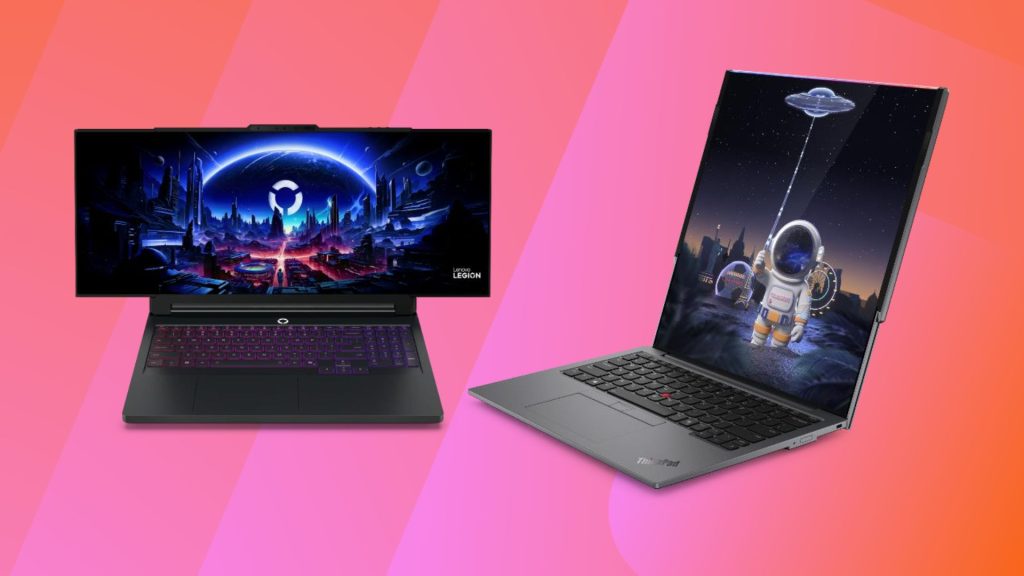
One of the most striking concepts on show is the ThinkPad Rollable XD Concept, a laptop that physically expands its display to deliver significantly more workspace without increasing its footprint when closed.
Lenovo says the rollable panel can grow from a compact 13.3-inch layout into a much taller vertical display, giving users substantially more screen real estate for multitasking, document work, and collaboration.
A similar idea appears in the Legion Pro Rollable Concept, which applies rollable display technology to gaming hardware, suggesting future gaming laptops could dynamically balance portability with immersive screen sizes.
Alongside rollable screens, Lenovo is also showing the Smart Sense Display Concept, an intelligent monitor designed to wirelessly connect with multiple devices while automatically adjusting brightness, colour temperature, and layout based on user presence and posture.
The company positions these concepts as early explorations into hardware that adapts to how people work, play, and move rather than forcing users into fixed form factors.
Personal AI moves closer to the user
AI is another major theme running through Lenovo’s CES 2026 concepts, particularly in the Personal AI Hub Concept, a local edge-AI system designed to process workloads across a user’s PCs, phones, wearables, and smart home devices.
Powered by compact AI workstations using NVIDIA hardware, the hub is intended to reduce reliance on cloud-based AI while giving users more control over privacy, performance, and latency.
Lenovo is also previewing lightweight AI Glasses that pair with a smartphone or PC to deliver notifications, live translation, image recognition, and voice interaction without pulling out another screen.
Weighing just 45 grams, the glasses reflect Lenovo’s interest in ambient computing, where AI operates quietly in the background and information appears only when it is useful.
Overall, Lenovo’s CES 2026 concepts suggest the company is betting that the next phase of personal computing will be defined less by raw specifications and more by adaptive hardware and locally powered AI experiences.
The post Lenovo has gone all out with some wild concept tech for CES 2026 appeared first on Trusted Reviews.