

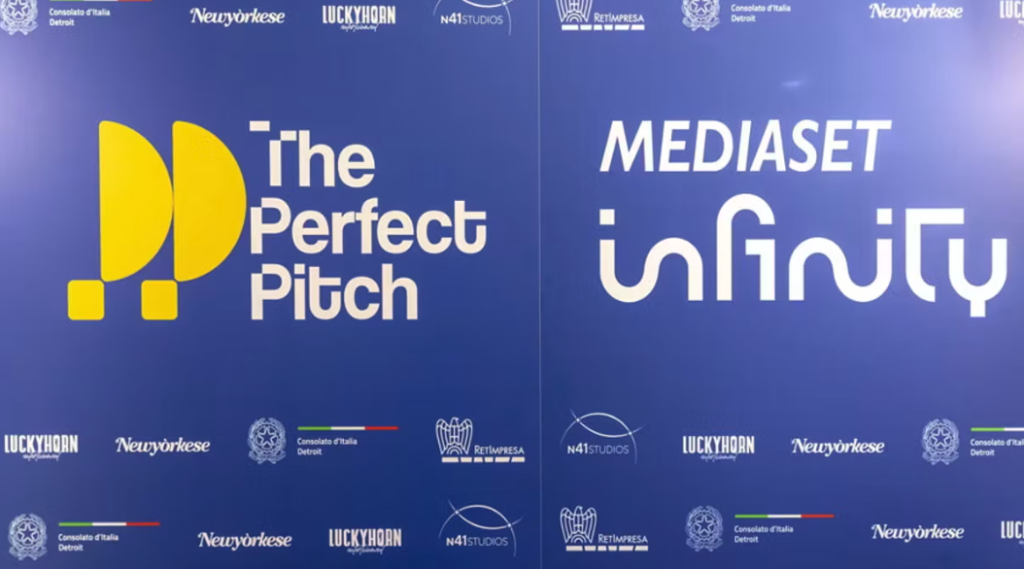
Why a new Italian TV format on startups could be a blueprint for connecting innovation, media, and international growth.
In the U.S., we’re used to startup storytelling through podcasts, demo days, and pitch competitions. Italy just experimented with something different: turning startup growth itself into structured entertainment content. The result is The Perfect Pitch, a TV series now streaming on Mediaset Infinity that follows three Italian mobility-tech startups as they expand internationally — including direct exposure to the North American market.
At first glance it looks like another branded-content show. It’s not. What makes this interesting for the startup ecosystem is how the project blends media, institutional support, and international business development into a single growth pipeline.
A Media Format Designed to Move Companies, Not Just Tell Stories
The series tracks startups selected through Italy’s ROCK Open Innovation program, promoted by RetImpresa (part of the Confindustria industrial network). Instead of stopping at storytelling, the show documents real business acceleration: investor meetings, ecosystem immersion, and market-entry strategy, particularly in North America.
One of the featured startups has since entered incubation in Canada — a concrete outcome that suggests the format is more than narrative marketing. It’s a soft-landing mechanism disguised as entertainment.
For U.S. founders, this hybrid model is worth watching. It effectively merges:
- Startup acceleration
- Institutional economic diplomacy
- Cross-border branding
- Content-driven investor visibility
That combination rarely happens in a single initiative.
Why This Matters to the American Startup Scene
There’s growing recognition that visibility and narrative are competitive assets. Founders increasingly operate in a media-first environment where storytelling can influence hiring, partnerships, funding access, and global positioning.
Italy’s experiment shows how entertainment content can:
- Create inbound investor attention without traditional roadshows
- Position emerging ecosystems internationally
- Strengthen economic ties between countries
- Turn innovation policy into cultural export
In practical terms, it’s a reminder that economic development doesn’t have to look bureaucratic — it can look like content.
Detroit, Mobility Tech, and Transatlantic Innovation
The show’s U.S. touchpoint wasn’t Silicon Valley but Detroit, which makes strategic sense. Mobility innovation, advanced manufacturing, and industrial transition are defining themes there. For Italian startups in sustainable mobility, exposure to that ecosystem means access to supply chains, legacy industry expertise, and North American investors who understand hardware and industrial tech.
That geographic choice signals something important: cross-border innovation is becoming more specialized and sector-driven, not just centered on coastal tech hubs.
A Playbook Others Might Copy
For accelerators, economic development agencies, and venture-backed media platforms, The Perfect Pitch hints at a replicable model:
Content → Visibility → Market Access → Investment → Ecosystem Growth
If scaled properly, formats like this could become part of national innovation strategy — especially for countries looking to strengthen economic ties with the U.S. while showcasing emerging sectors.
The Bigger Trend: Innovation as Cultural Export
American startup culture has long exported its narrative globally. Now we’re starting to see the reverse: other ecosystems packaging innovation as cultural content aimed at international audiences.
Italy’s approach blends design, storytelling tradition, industrial know-how, and institutional coordination — a combination that might feel unusual to U.S. founders but increasingly relevant in a globalized innovation economy.
If the future of startup growth includes media visibility as a core asset, projects like this won’t stay niche for long. They’ll become part of how ecosystems compete.
And that’s why this Italian experiment is worth paying attention to. Not just as a show — but as an emerging economic strategy.