

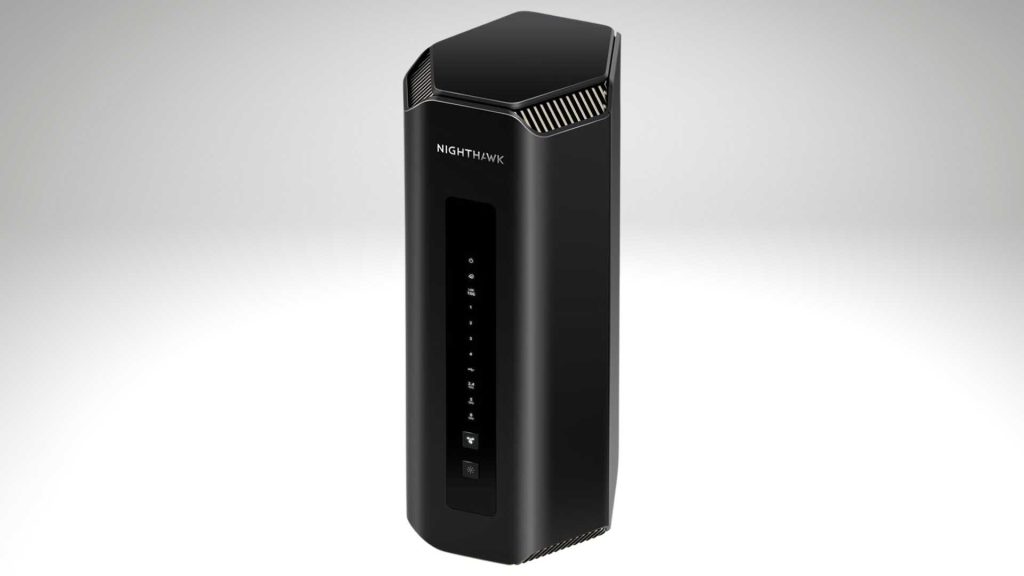
TP-Link has officially announced Archer 8, its first Wi-Fi 8 router platform. This marks an early step into the next generation of home networking. The platform is built around the still-emerging IEEE 802.11bn standard.
Rather than focusing on headline peak speeds, TP-Link is positioning Wi-Fi 8 as a shift toward real-world stability. This is particularly important in homes where dozens of connected devices compete for bandwidth. The Archer 8 is designed to address things like inconsistent room-to-room performance, congestion under heavy loads, mesh roaming instability, and latency spikes during gaming, streaming, and video calls.
Set for launch in October 2026, Archer 8 also serves as the foundation for a broader Wi-Fi 8 ecosystem. This ecosystem will roll out across TP-Link’s product range through 2027. It will include Deco mesh systems, travel routers, and range extenders.
On the hardware side, the Archer 8 adopts a more refined industrial design than typical routers. It features a minimalist chassis, micro ridge texturing, precision contours, and a soft front-facing light designed to signal status without being visually intrusive. Clearly, its design blends into modern living spaces rather than function as a purely utilitarian box on a shelf.
Under the surface, TP-Link is pairing that design with a focus on signal reliability and consistency. The company highlights a combination of antenna architecture improvements, RF optimisation, thermal engineering, and AI-assisted network management. These all intends to smooth out performance in dense environments in constantly connected multiple devices.
The most notable claims come from early internal lab testing. TP-Link compared Wi-Fi 8 pre-standard performance against Wi-Fi 7 under simulated real-world conditions. The results point to incremental but meaningful gains across stability and throughput rather than raw speed alone. This includes up to 33% higher through improved modulation techniques, up to 24% gains from uneven modulation handling, and up to 15% improvements in multi-access-point interference scenarios.
Elsewhere, TP-Link reports up to 30% better performance in multi-floor coverage for single-device connections. There are also 10–20% gains in multi-device environments thanks to antenna and AI-driven optimisation. In addition, it claims a 1–3 dB improvement in receive sensitivity across the 5 GHz and 6 GHz bands, aiming to strengthen coverage in harder-to-reach parts of the home.
The post TP-Link has revealed its first Wi-Fi 8 router, and it’s coming this year appeared first on Trusted Reviews.