

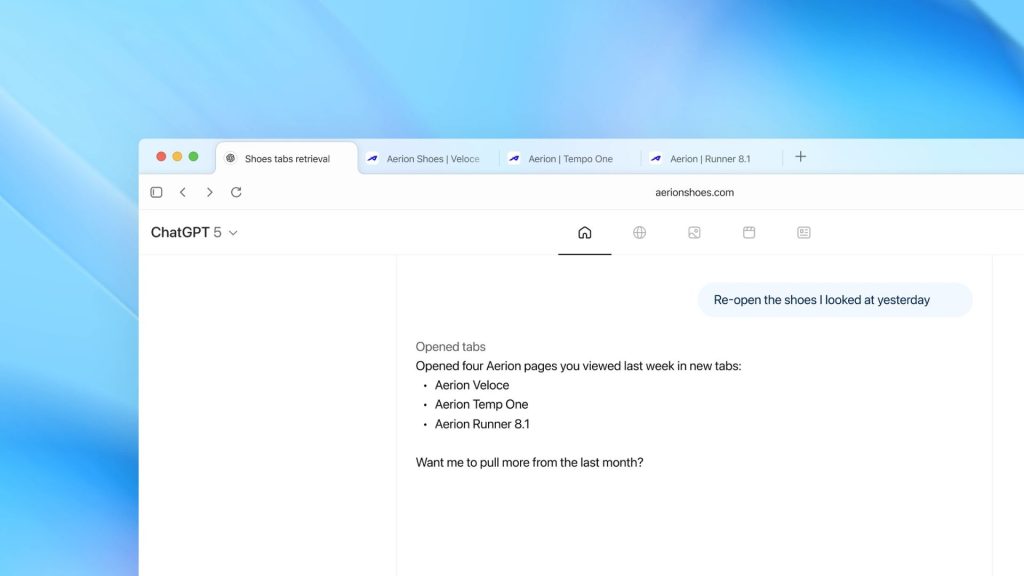
OpenAI has confirmed it’s pulling the plug on one of its newest products.
Less than a year after launching ChatGPT Atlas, the AI-powered browser designed to complete tasks on users’ behalf, the company has announced it will shut the service down on 9 August.
The move comes as OpenAI shifts its attention towards ChatGPT Work, a new productivity-focused platform that folds many of Atlas’ ideas into the main ChatGPT experience.
Atlas launched in October with the promise of handling web-based tasks for users. This allowed the AI to browse websites and complete actions instead of simply answering questions. However, OpenAI says the product’s future now lies elsewhere.
In a post outlining the new ChatGPT Work features, the company confirmed Atlas would be “sunsetting”. Meanwhile, OpenAI’s James Sun said the lessons learned from early users directly shaped the new platform.
“All these capabilities were built on what we learned from Atlas users who took a leap of faith on a new browser,” Sun wrote. “You taught us how agents can help make browsing and doing work on the open web better, and we are applying these learnings to these new products.”
Rather than maintaining a separate browser, OpenAI has instead integrated browser-based AI tools into the desktop ChatGPT app and introduced a cloud browser as part of ChatGPT Work. The move follows earlier reports suggesting the company wanted to combine Atlas, Codex and the ChatGPT app into a single desktop experience.
The decision also reflects OpenAI’s broader push to streamline its product lineup. Reports earlier this year suggested the company was looking to cut back on side projects in order to focus on core productivity features. This would help it better compete with rivals such as Anthropic.
Atlas isn’t the only casualty of that strategy either. In recent months, OpenAI has also shut down its standalone Sora video generation app. It has also paused plans for a dedicated ChatGPT “adult mode”.
For Atlas users, the shutdown marks a surprisingly short lifespan for a product that was introduced as a major step towards AI agents handling everyday online tasks. Instead, those capabilities now appear set to live on as part of ChatGPT Work rather than through a dedicated browser.
The post The ChatGPT browser is dead after less than a year appeared first on Trusted Reviews.