

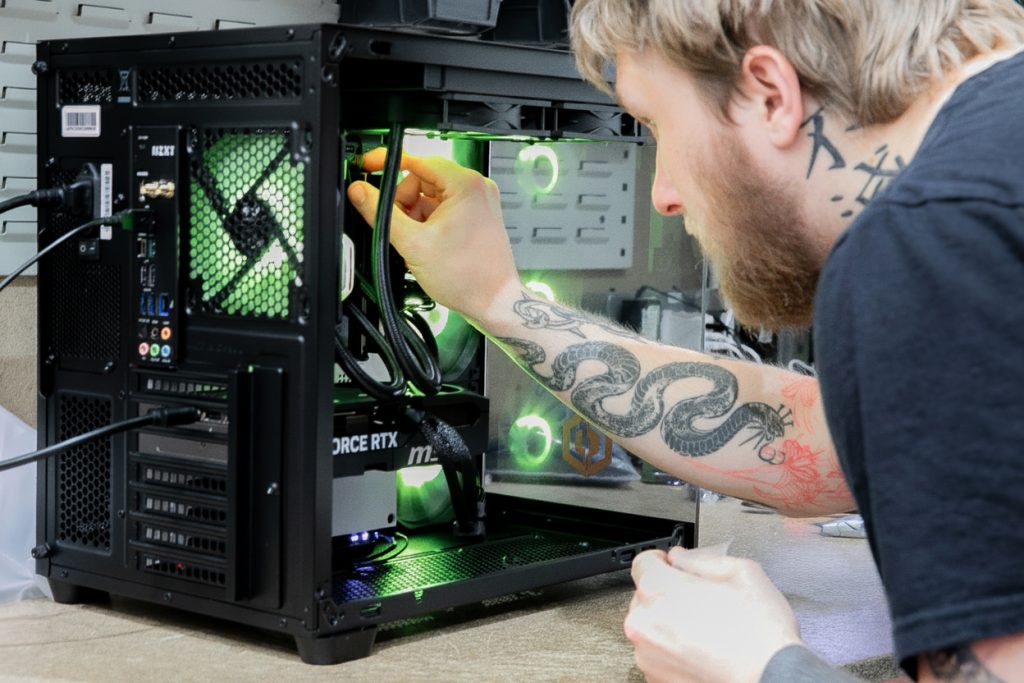
If you’ve spent any time down the gaming PC rabbit hole, you’ll have hit this fork in the road already: do you build the thing yourself, or do you let someone else do it for you? It’s one of those debates that never quite dies down and is always a matter of preference – some folks prefer to have the control of building their own system, configuring every element, while others want the experts to take the strain to make sure everything works as it should the first time the PC boots.
While this age-old debate hasn’t really shifted, what has changed, though, is the gaming PC market itself. Component choice has exploded, and folks have more choice now than ever before, making it perhaps easier than ever before to build or spec out a custom gaming PC for themselves. You no longer necessarily have to choose between “fully custom” and “convenient” — but to understand why that matters, it helps to look at both routes properly first.
The case for building your own PC
There’s a certain satisfaction in building a PC from scratch. You get to pick every component yourself and learn how it all fits together, not to mention the genuine sense of achievement when you hit the power button for the first time and everything boots. For PC enthusiasts and hobbyists, that process is half the fun, myself included.
However, it’s worth being honest about what it actually demands. Building a PC requires a decent grasp of compatibility, or how everything fits together. Motherboard sockets, RAM speeds, PSU wattage, case airflow, cooler clearance and more are all worth being mindful of. Getting any of that wrong can mean a system that underperforms, or worse, doesn’t work at all. Then there’s the time: sourcing parts, waiting on deliveries, the build itself, and the inevitable troubleshooting when something doesn’t quite play ball.
Cable management, in particular, is a skill in its own right, and a messy build isn’t just an eyesore. Poor airflow from bad cable routing can quietly hurt your thermals and performance over time.
For first-time buyers or anyone switching over from console to a PC for the first time, that’s a lot to take on before you’ve even played a game. And if something does go wrong down the line, you’re generally on your own to diagnose it, since self-built systems don’t come with the kind of unified warranty support you’d get from a manufacturer or someone doing it on your behalf.
The case for buying a pre-built PC
It’s precisely here where pre-built systems earn their reputation. Buying from a specialist manufacturer such as CyberpowerPC means every component has already been tested for compatibility, the cable management is handled by people who do it for a living, and the whole system has been through quality assurance before it ever reaches your door to make sure everything will work as it should.
Warranty support is the other big one. A proper prebuilt gaming PC comes backed by a manufacturer who’ll stand behind the hardware, which matters enormously if a component fails outside of what you could diagnose yourself. For parents buying a system for a teenager, or for anyone who just wants a machine that works reliably from day one, that peace of mind is worth a lot.
The trade-off historically has been choice. Prebuilt used to mean picking from a handful of fixed configurations, often with compromises somewhere in the spec sheet. Manufacturers used to have a reputation for using no-name components where it mattered to keep costs down, although it’s become less common these days. That’s the bit of the market that’s changed the most.
The best of both worlds: configure your own with professional help
There is a third way, which is perhaps the best of both worlds – speccing out a custom PC from a reputable builder such as CyberPowerPC UK. Rather than forcing a choice between full customisation and professional reliability, CyberPowerPC UK’s custom gaming PC configurator lets you build a system to your exact spec — choosing from the latest NVIDIA GeForce RTX graphics cards, AMD Ryzen processors, and Intel Core processors to suit your needs and specific games you’re playing – and then hands the actual build over to people who do it for a living.
You get the tailored spec of a self-build, without taking on the risk of compatibility mistakes, botched cable runs, or a PSU that’s not quite up to the job. Every system is assembled, tested and quality-checked before it ships, and you’re covered by proper warranty and after-sales support if anything needs attention later. If you’d rather skip the configurator entirely, the prebuilt gaming PCs page has ready-to-go options for anyone who just wants a great system without the decision fatigue.
It’s a genuinely useful middle ground for a lot of the people currently weighing this decision up — first-time PC buyers who want guidance rather than a blank canvas, console gamers making the jump who don’t want to go the whole hog right out of the gate, and upgraders replacing an ageing system who don’t want to relearn PC building from scratch. Enthusiasts benefit too, since a configurator this deep still lets you get properly specific about the build without doing the assembly yourself.
It’s also worth noting that the PCs on offer from CyberpowerPC don’t just have to be for gaming. The systems are also built with streaming and content creation in mind as well, so if you’re planning to start streaming your sessions or editing footage on the side, the hardware you choose through the configurator can be specced to handle it.
Likewise, because these are proper, professionally built towers rather than more sealed-off options, there’s genuine headroom to upgrade down the line. Swap in a new GPU in a couple of years, add more storage or whatever it turns out you might need later down the line.
If you want a hand working out what’s right for you, CyberPowerPC UK’s team offers expert advice throughout the configuration process, and the support page is there for anything that comes up after your system arrives.
So, do you build or buy?
This is what it all comes down to. If you love the process of speccing out a custom unit, putting it together yourself and troubleshooting anything that crops up, the self-build route is rewarding.
However, there is something to be said for letting someone else take the majority of the strain, especially anyone buying their first gaming PC, switching from console, or upgrading without the time to relearn PC hardware from scratch. A configurable prebuilt system offers the best of both worlds: a machine built exactly to your spec, assembled and tested by people who know what they’re doing, and backed by warranty support if anything goes wrong.
To learn more and see the current range, head to the CyberPowerPC UK gaming PCs page to see the current range, or jump straight into the configurator to start building.
The post DIY gaming PC or prebuilt: Which is right for you? appeared first on Trusted Reviews.