

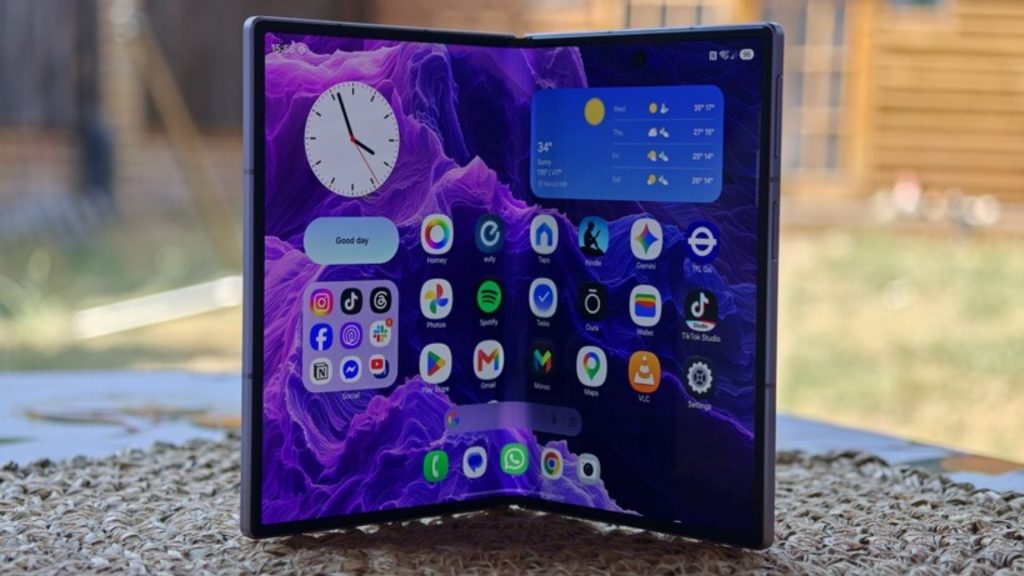
Samsung could be taking its flexible display technology in a new direction, with a fresh leak suggesting the company is developing a rollable smartphone that can switch between 16:9 and 21:9 screen ratios.
According to well-known leaker Ice Universe, Samsung is working on a handset capable of changing its screen proportions depending on how it’s being used.
Rather than unfolding like the Galaxy Z Fold series, the device would use a rollable display that extends or retracts, potentially giving users a larger screen without the bulk of a traditional foldable.
The idea is an interesting one, particularly as Samsung continues to experiment with different ways of making smartphone displays more flexible. A 16:9 screen is well suited to widescreen video, while the taller 21:9 format could offer more room for scrolling through apps or viewing content in portrait orientation.
Being able to move between the two could make a single device more adaptable, although the leak doesn’t explain exactly how Samsung intends to achieve it.
Furthermore, this isn’t the first time Samsung has been linked to a rollable phone. Rumours surrounding the technology have circulated for years, but the company has yet to announce a consumer device.
Unlike foldables, which rely on a hinge to open and close the screen, rollable designs allow part of the display to slide into the body when it isn’t needed.
We’ve already seen a few attempts at making the idea work. LG came particularly close with its unreleased Rollable smartphone, which was reportedly heading towards a commercial launch before the company exited the smartphone business.
Motorola also demonstrated its Rizr rollable concept at Mobile World Congress in 2023, showing how a display could expand vertically without requiring a folding mechanism.
The bigger challenge is turning those demonstrations into something people can actually buy. A screen that repeatedly slides in and out of a phone needs to withstand everyday use, while the additional moving parts leave manufacturers with questions around durability, thickness and battery space.
Samsung has already spent years refining its foldable phones, but a rollable design would introduce a different set of engineering challenges.
There’s also the question of cost. Samsung’s first tri-fold phone launched in the US at $2,900, showing just how expensive these more experimental designs can be. A rollable handset could face similar pricing challenges, particularly if it arrives as a limited-release product rather than part of the company’s mainstream Galaxy range.
As of now, there’s no confirmed launch date, pricing or indication of how far development has progressed.
Samsung’s reported rollable phone remains firmly in rumour territory, but the prospect of a screen that changes shape without folding could be an interesting next step for a company that’s already pushed flexible displays further than most.
The post Samsung’s rumoured rollable phone could give foldables a new rival appeared first on Trusted Reviews.