

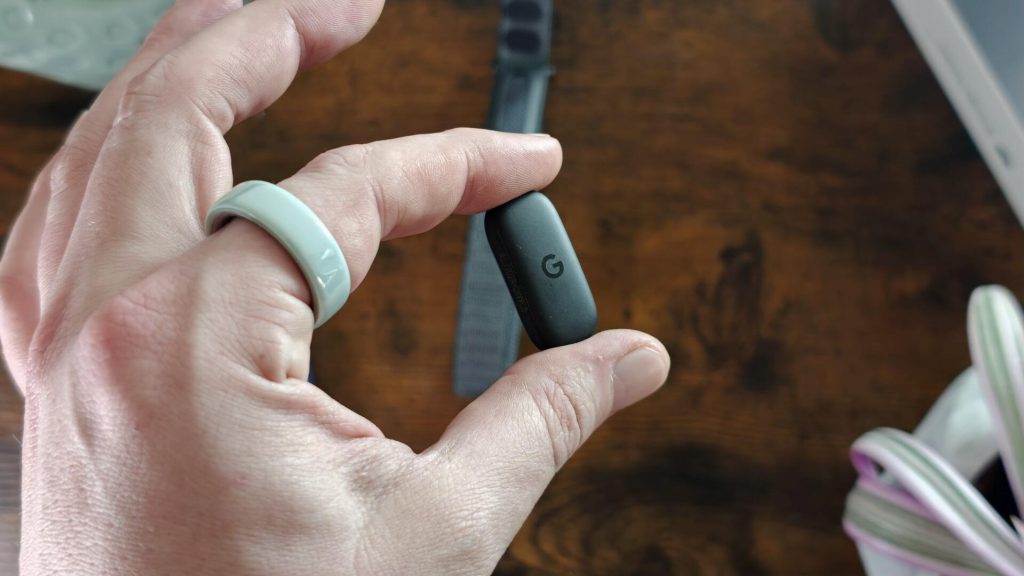
Google is opening up its Fitbit ecosystem in a way that goes well beyond typical accessory support.
Rather than keeping design specifications locked down, Google has released the full technical blueprints for the new Fitbit Air. These include precise measurements, 2D CAD drawings, tolerances, and mechanical fit details. Anyone can now design and manufacture compatible accessories, from third-party brands to individual users using a 3D printer.
The documentation goes into unusual depth for a consumer health tracker. Alongside exact dimensions, Google has also shared mating force requirements and structural guidelines, ensuring accessories attach securely without affecting comfort or sensor performance. That’s particularly important here, since the Fitbit Air relies on consistent skin contact to accurately measure metrics like heart rate and SpO2.
In other words, this isn’t just about making straps that “fit”. Instead, it’s about making sure modifications don’t interfere with how the device actually works.
Google is also placing clear emphasis on material safety. The published specifications include restricted substance guidelines covering everything from lead-free copper and brass alloys to allergen-free natural latex. The focus is on ensuring that third-party designs remain safe for prolonged skin contact, especially given the product’s wearable nature.
The Fitbit Air itself sits in a relatively new category for Google. Priced at £85/$100, it’s a screenless health and fitness tracker that plays well with both the Google Health app and the Gemini-powered Health Coach. Instead of relying on on-device displays, it pushes insights and recommendations directly to your phone.
Since launch, users have already started experimenting with unofficial accessories – from custom armbands to early 3D-printed mounting solutions. Google’s decision to publish official design data effectively legitimises that trend, turning what might have remained a niche maker movement into a supported extension of the product itself.
It also subtly changes the role of Fitbit Air from a closed wearable into something closer to a modular platform. While Google isn’t handing over full control of the ecosystem, it is clearly inviting external experimentation – as long as it doesn’t compromise sensor accuracy or user safety.
The result is a wearable that feels less fixed and more adaptable. Google is effectively encouraging users to treat the Fitbit Air as a base layer for personal hardware design, rather than a finished, static product.
The post Google just opened the door to custom Fitbit Air accessories appeared first on Trusted Reviews.