

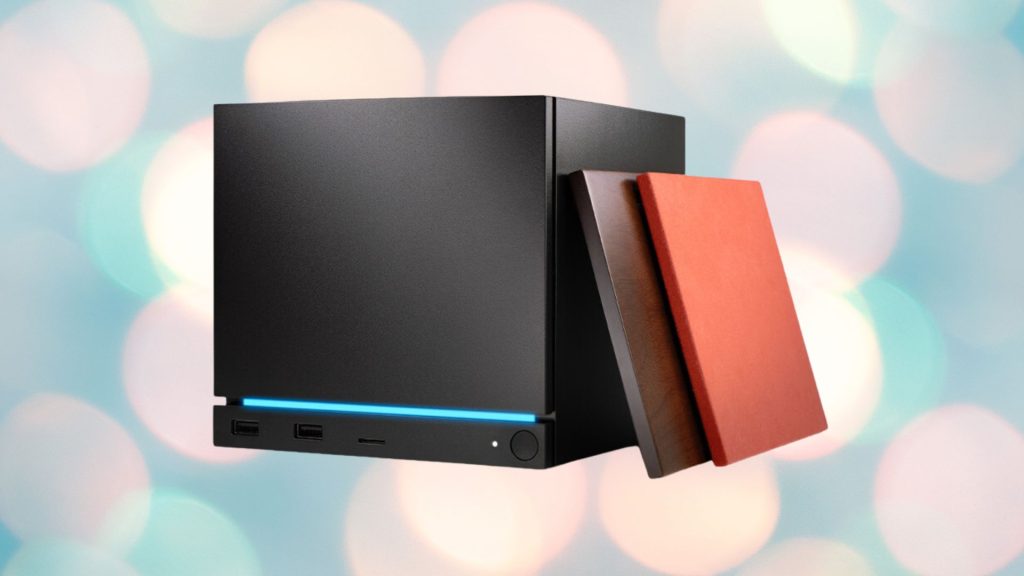
Valve has published a full set of files that let Steam Machine owners build their own e-ink faceplate at home.
The faceplate, known as Inkterface, first appeared when Valve unveiled its Steam hardware line last year, though the company gave no timeline for release.
Third-party manufacturers have already begun producing their own faceplate designs following the Steam Machine’s launch this week, reflecting how the console’s swappable front panel has opened a small hardware accessory market.
Valve’s decision to release the Inkterface project publicly rather than sell it as an official accessory places the console alongside other modular hardware platforms that lean on community-built add-ons instead of first-party peripherals.
The complete project now sits on GitLab, giving anyone with a 3D printer access to the CAD files needed to produce the faceplate’s outer housing and its internal mounting components.
Alongside the printable files, the repository includes a full list of required hardware components, so builders know exactly what to source before starting the project, avoiding guesswork about missing parts.
Assembly instructions are provided in both PDF and video formats, a combination that suits builders who prefer written steps as well as those who would rather follow each stage visually.
Once the hardware has been assembled, firmware instructions guide builders through flashing the required software onto the supported ESP32 board that powers the small e-ink display mounted inside the finished housing.
That board handles the ongoing connection between the faceplate and the Steam Machine, a link that currently depends on software builders create themselves rather than an official release available through Steam.
Following the firmware setup, users can build their own AppImage using the instructions on the GitLab page to get the display running on their systems before any official app is released.
Bluetooth connectivity then allows the faceplate to pull live data directly from the Steam Machine, letting it display real-time hardware statistics alongside custom images chosen by the user.
An official Steam app built specifically for the faceplate is planned, though Valve has not confirmed a firm release date for the companion software just yet.
Until that official app arrives, the GitLab project remains the only way to get an Inkterface faceplate running, with setup depending entirely on the community-facing tools Valve has released so far.
The post You can now 3D-print Valve’s Steam Machine e-ink faceplate with official files appeared first on Trusted Reviews.